

Devin Schadt / February 16th, 2026
The Way of a Man Series | #124
1751 words / Read Time: 7 minutes
Why Disorder Is Undermining Men—and How Lent Restores Order
Men’s group study guide available here.
Preface
(To proceed directly to the article, scroll to: “The Need for Predictability and Surprise.”)
This reflection presents a Catholic framework for becoming a well-ordered man, showing how divine order allows a man to integrate prayer, sacrifice, work, discipline, and relationships into a unified life oriented toward God.
What You Will Find in This Article
• Why disorder in a man’s life leads to anxiety, temptation, and spiritual paralysis
• How predictability and surprise function together in a well-ordered soul
• Why Lent is a privileged time for restoring spiritual order
• A clear framework for examining the state of your interior life
• Eight essential areas of life that must be intentionally filled with virtue and discipline
The Need for Predictability and Surprise
Motivational speaker Tony Robbins is famous for saying that human beings need predictability. To hit the switch and the lights come on; to awake in your own bed and not in a prison; to put the key into the ignition and the car starts—we depend on and enjoy the fruits of predictability.
Tony also says that human beings need surprise. A random gift from a friend, a compliment that catches you off guard, a surprise birthday party—these things often delight us.
But if our lives are too predictable, we become bored. We lack adventure, excitement, and the hope of a better life.
If our lives have too many surprises, we become stressed. Without predictability, cortisol levels spike, our neurological defense system becomes overloaded, and eventually we become riddled and vexed by anxiety and depression. Ask anyone who has lived in gang territory or mafia-dominated neighborhoods.
In order to appreciate both predictability and surprise, we need order. Order is the framework that allows the human person to thrive, excel, and grow in virtue and excellence. And Lent is the perfect time to establish that order.
Tony Robbins’ proposal is founded upon divine truth that pertains to the well-ordered man.
The Enemy of Disorder
God ordered and orders order. The Genesis creation account recounts that God built the framework of the universe in three days and proceeded to fill that framework in the following three days. After His work was completed, He took the seventh day off to delight in His craftsmanship and creativity.
It was on the sixth day that God created the first man, Adam, enjoining upon him a series of commands: to till and keep the garden; to not eat from the tree of the knowledge of good and evil; to name the animals. God, being a perfect Father, entrusted Adam, His son, with the duty to continue to bring order to the created realm.
It was amidst his duty to bring order that Adam discovered an interior ache—as St. Pope John Paul II defines it, the ache of solitude. In naming the animals, Adam discovered within himself a need, a desire for a suitable partner, and the pain of not knowing who or what could satiate that ache.
Within his well-ordered world, God surprised Adam, who, after awakening from a supernatural slumber (tardemah in the Hebrew), set his eyes on Eve, the fulfillment of his desire—and he was surprised. The unexpected creation of Eve gave Adam tremendous joy and delight.
As Adam set himself to the task of establishing order, he would remember God’s command to till and keep the garden. The word rendered keep is the Hebrew word shamar, which means to protect. Adam was commanded to protect the garden and the woman. But from what? Adam intuited that an enemy existed and that it was his duty to stand guard against this unknown, unrevealed threat.
Then comes another surprise.
The enemy approaches Adam through the one whom he loves—through Eve.
From this, we understand that the element of surprise can possess both a negative and a positive quality.
The Divine Duty to Establish Order
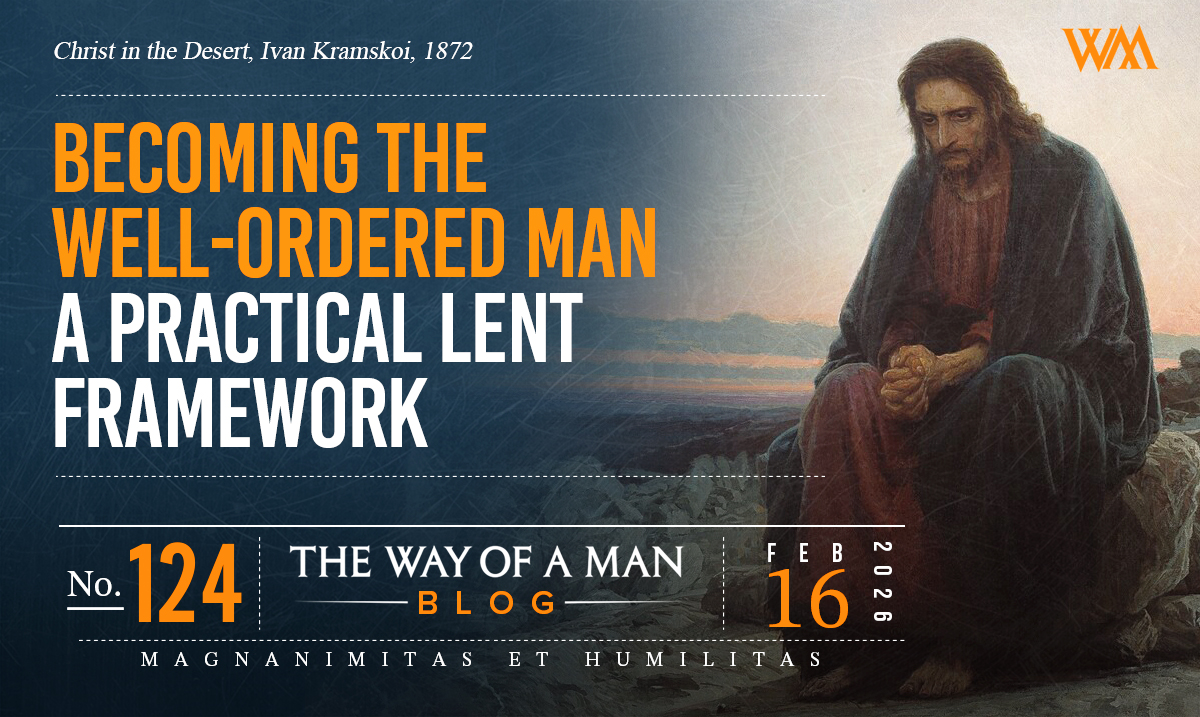
Our Lord Jesus, after being baptized by John the Baptist and receiving the affirmation of all affirmations from God His Father—“You are my beloved Son; with You I am well pleased”—was driven by the Spirit into the desert.
Adam, the original man, was created in paradise and commanded to bring order to it. But because of his rebellion against God—choosing the creature above the Creator—he was banished from that place of paradise.
Due to Adam’s transgression, paradise became a wilderness, laden with thorns, thicket, suffering, and aridity. While structurally ordered, the world became a place of unhappy surprises, bearing the mark of chaos and disorder.
The New Adam, Jesus Christ, ventures into Adam’s wilderness to re-order creation; to bring order to chaos, life to death, and paradise to hell.
During Lent, we recall and metaphorically follow Our Lord’s trek into the wilderness with a singular purpose: to bring order to our disordered lives.
Jesus wills to make of you a paradise in which He may dwell. Or more precisely, Our Lord desires to dwell in you in order to make you His place of paradise.
Our Lord wants and wills to re-order your soul, which demands that disorder be removed and replaced with true order. He desires that you become the well-ordered man.
What Are You Full Of? What Do You Lack?
Have you ever had the experience of opening a cabinet in hopes of finding food, only to discover that the cabinet is barren? Or have you opened a drawer in hopes of locating something, but find it chock full of anything and everything but what you are looking for?
Both emptiness and being overloaded with junk result in frustration, disappointment, and additional wasted time.
Imagine your soul as a wall comprised of eight cabinets. These are the eight essential categories of the soul.
Each cabinet—each category—has the function of storing within it the virtue that you need.
But what if that cabinet is empty of virtue—or, just as disappointing, is full of vice?
Unfortunately, this is the tragic state of many a man’s spiritual life. Our cabinets are full of disorder, sin, vice, and immorality. When we open the doors to these cabinets, disorders like anger, lust, jealousy, impatience, and pride fall out, making an even bigger mess. Consequently, we keep those doors shut tight, hoping to hide our disordered junk from the world. In doing so, we fail to remove the junk from our souls.
On the other hand, there are critical situations in which we need to draw something from deep within our soul. In moments of danger, when fear abounds, we need courage. When we experience profound grief, we need to draw from a deeper well of faith and trust. But often, we open those cabinet doors to find the cupboard empty. We have nothing from which to draw strength.
Your Eight Cabinets: The Framework of The Well-Ordered Man
The wall of cabinets that configure your soul is comprised of these eight categories:
- Relational: These are the relationships that are most important to you—or should be. Your wife, your children, your parents, your friends—but most especially your God.
- Devotional: These are the methods and means by which you spend time with God, conversing with Him about your life and learning about His.
- Sacramental: The Holy Sacrifice of the Mass and the sacrament of Confession and Penance are the two that have primary prominence in our spiritual life—or at least they should have that importance. One feeds us; the other cleanses us.
- Sacrificial: These are the secret offerings, abnegations, fasts, acts of service, and sacrifices that only you and God know about. These acts are offered for the sake of others and in gratitude for God’s forgiveness of our sins and His benevolent gift of salvation to us.
- Physical: This is comprised of your sleep; the things you eat and do not eat; exercise—both aerobic and anaerobic; what you drink and do not drink.
- Occupational: This is your employment, which you are to do with excellence and effort while keeping it in its proper place. Your occupation is at the service of your vocation—not vice versa.
- Vocational: This is your calling from God. If you are a husband or a father, this is your primary path to glory. How will you respond to God by serving those for whom you have been endowed with sacrificial responsibility? In other words, how will you insert yourself into their lives in order to draw them closer to God and toward their sanctification?
- Recreational: This is not merely vegging out on video games, doom-scrolling, or binge-watching on your favorite video platform. This concerns leisure. The word recreational literally means to be re-created. What activities will bring your life rest, vitality, and renewal without draining that vitality from you and turning you into a human zombie?
Filling the Cabinets: Identifying Habits (Virtue)
Now that we have identified our eight areas, we are to identify habits in each of those areas that will aid us in becoming sanctified, holy, and capable of living in union with God.
For example, perhaps you fill the Devotional cabinet by dedicating your first half hour in the morning to God by praying over the daily Gospel.
Or you fill your Sacramental cabinet with one daily Mass per week, or by spending fifteen minutes adoring Our Lord in the Most Blessed Sacrament of the Altar once per week.
Perhaps you fill your Relational cabinet with a weekly date night with your wife, which demands that you remove from that cabinet the vice of lust. Perhaps it is taking your daughter out for coffee.
Or you remove sweets and extra snacks from your Physical cabinet and replace them with three healthy meals and fifteen minutes of exercise four times a week.
Perhaps you fill your Vocational cabinet with family dinner every night—which demands that you empty your Occupational cabinet of the overflowing junk of working overtime.
You get the idea.
This Lent, identify which “cabinets” or categories you need to remove vice from. Second, fill those cabinets with virtue by identifying one to two habits for each particular category. Third, make a commitment to fulfill those habits with daily and weekly actions.
This is important: write it on the calendar; schedule it in; and remain committed to fulfilling your commitments.
By doing this and remaining committed to the process, you become like Our Lord: you bring order to disorder, spiritual water to the desert of your soul. You fill your soul with virtue while removing vice. You become a paradise in which God loves to dwell—and one with whom the people around you desire to commune. You become the well-ordered man.
To understand the deeper crisis of fatherhood and the model provided by St. Joseph, read St. Joseph’s Fatherhood.
Further Reflections on Order, Discipline, and Spiritual Formation
The following reflections deepen and apply the principles outlined here, particularly for Catholic men seeking lasting spiritual formation:
From The Catholic Gentleman
- Why Order Is the Foundation of the Spiritual Life
https://catholicgentleman.com - Lent Is Not About Giving Things Up
https://catholicgentleman.com - The Daily Rule That Forms Strong Men
https://catholicgentleman.com
From Sword & Spade
- Discipline Is the Doorway to Freedom
https://swordandspade.org - Why Comfort Is the Enemy of Masculine Virtue
https://swordandspade.org
From Heroic Men
- The Interior Life of a Disciplined Man
https://heroicmen.com - Why Order Precedes Leadership
https://heroicmen.com
Men’s group study guide available here.
Endnotes
- Tony Robbins, The Six Human Needs (teaching framework on certainty and variety)
https://www.tonyrobbins.com/mind-meaning/do-you-need-more-certainty-or-variety/ - Tony Robbins, quoted in: “The quality of your life is directly related to how much uncertainty you can comfortably handle.”
https://quotefancy.com/quote/923119/Tony-Robbins-The-quality-of-your-life-is-directly-related-to-how-much-uncertainty-you-can - Catechism of the Catholic Church, §538–540 — Christ’s temptation as redemptive obedience
https://www.vatican.va/archive/ENG0015/__P1O.HTM - EWTN, The Paradise of the Desert Fathers — on the desert as the place of spiritual combat and re-ordering
https://www.ewtn.com/catholicism/library/paradise-of-the-desert-fathers-12508 - Peters et al., Uncertainty and Stress: Why It Causes Diseases and How It Is Mastered by the Brain, Progress in Neurobiology
https://www.sciencedirect.com/science/article/pii/S0301008217300369 - McEwen, Neurobiological and Systemic Effects of Chronic Stress, Neurobiology of Stress
https://pmc.ncbi.nlm.nih.gov/articles/PMC5573220/ - Overview of stressor predictability and physiological response
https://en.wikipedia.org/wiki/Stressor - Jericho Tree, Pope John Paul II and Original Solitude — accessible theological summary
https://jerichotree.com/2014/10/24/loneliness-part-3-pope-john-paul-ii-and-original-solitude/

Devin Schadt
Executive Director | The Fathers of St. Joseph
Related Resources
Related Articles