




Devin Schadt / October 13th, 2026
The Way of a Man Series | #141
870 words
Loving Without Keeping Score
She Doesn’t Seem to Care
“My wife doesn’t seem to care. We’ve grown apart. I don’t know what to do.”
At the root of that statement is a longing to heal his marriage.
But often we ask ourselves, “But what if I take a chance and try to love her and she doesn’t respond?”
We want our marriages to be great—but fear of failure often handcuffs us. What if my efforts are worthless?
The two greatest commands are to love God, and to love your neighbor as yourself.
If you and I are to love God and our neighbor, we must love ourselves as God loves us.
For married couples, the command is to love your spouse as yourself.
Love Must Be Returned
Married couples often make the error of either loving their spouse to get something in return, or believing that loving one’s spouse means getting nothing in return.
Neither way is true love.
Love begets love.
Justice demands that when we love another, that love ought to be reciprocated.
This does not mean that when we serve and sacrifice for our spouse, we expect something in return.
The nuance is that, by justice, love is returned for love, yet our motivation to love is not, per se, to be loved in return.
A man loves his wife and demonstrates his love for her own sake.
His motivation is not for his own sake—but hers.
“Love,” St. Thomas Aquinas tells us, “is to will the good of the other for the sake of the other.”
However, he hopes she will return that love to him, for his own sake.

6 Benefits of Making Her Secure In Your Love
With this caveat in mind, I asked my wife, “Is it fair to say that a husband who intentionally works to help his wife feel secure and confident in his love can expect his wife’s behavior toward him to be favorable—even beneficial?”
She listed six benefits:
- She will be more confident
- She will be more patient and understanding with you and your children.
- She will be more secure in herself.
- She will be happier
- She will love her marriage and her family.
- She will be more willing to address his needs
When my wife is more confident, patient, and understanding with our children and me, when she is secure in herself, happier, loving our marriage and our family, and addresses my needs, I am at ease, more confident, and happier.
To love your wife for her own sake is to love your neighbor as yourself, because when you love her for herself, she will love you for yourself.
Loving Your Wife: Be the First to Love
Men, we are not to wait for our wives to make the first move in initiating love.
That is our job.
As St. John Paul II said, “Although the maintenance of the balance of the gift seems to be entrusted to both [the husband and the wife], a special responsibility rests with the man above all, as if it depended more on him whether this balance is maintained or broken, or even—if already broken—re-established.”

It is as if our wife’s distance, resentment, apathy, or lack of attention is our fault.
That is a negative way of understanding John Paul’s words.
Rather, he is encouraging us husbands to take the first step in maintaining the balance of love, or, if our marriage is strained, to make the first move to re-establish that self-giving love.
If you notice that your wife lacks confidence, is impatient and lacks understanding, is insecure, and finds your marriage and family a burden, you must decide how to re-establish the dynamic of the gift of self.
Don’t wait for her to do it.
You Must Love From God First
“Where there is no love, put love, and there will be love (St. John of the Cross).”

But it demands that you and I drink from the source of love—God.
To give love presupposes that we are receiving love from God, who is love.
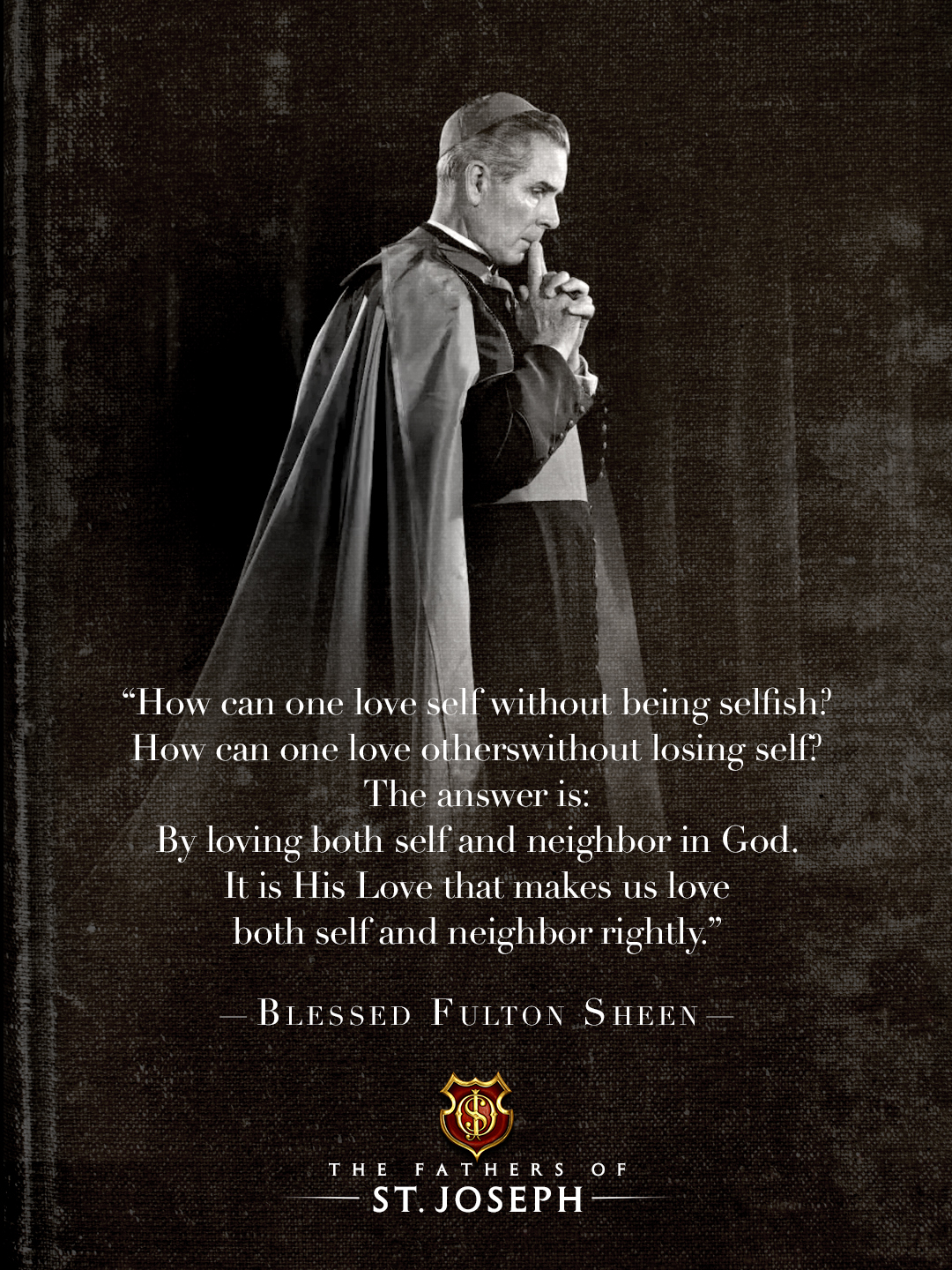
As Blessed Fulton J. Sheen wrote:
“How can one love self without being selfish? How can one love others without losing self?
The answer is: By loving both self and neighbor in God.
It is His Love that makes us love both self and neighbor rightly.”
3 Things To Re-Establish Love
How can you and I take that next “first step” to re-establish love in our marriage?
We need to establish or re-establish the basic principles of a well-ordered life:
1. Intentionally and consistently carve out time to spend with God.
2. Express your hopes for your marriage to God. Entrust your marriage to Him.
3. Ask Him for one small thing you can begin to do today to show your wife you think about her and love her—without expecting anything in return.
I realize that this may sound too simplistic.
But ask yourself: am I doing all three of these things well, every day, and with intentionality?
Do this enough, and your marriage most likely will experience real joy, intimacy, and trust.
Do you want a joy-filled, trusting, intimate marriage?
Learn more and get your copy of:
The Marriage Gap: How to Understand, Communicate, and Meet Your Spouse’s 4 Deepest Needs

Devin Schadt
Executive Director | The Fathers of St. Joseph
Related Resources
Related Articles